

autumn cross-quarter・♏︎Partial Obscurations—№ 0001
51.5299° n, 0.1277° w // conditions: overcast // ☾ waning gibbous–––––––––––––– observed: 2026Back to the Source
Ad Fontes and Portable Tape on the Nineties Screen.
By Nash Gierak⋄ Contents ⋄
Back to the Source
Archive
Marginalia
#1 How to Stay Alive in the Woods
#2 RadioShack in Room 315
#3 The Cabrini Requiem
#4 The Unexhumed Stage
#5 95a Rye Lane
Plates
Postscript
✥
Sitting at the desk this evening, with Radio 4 humming quietly in the background, I realise I’ve accumulated a formidable stack of notes. Working with tape means constantly writing things down: timestamps, machine settings, an enforced surrender to time. If you want to hear what’s at minute forty-two, you have to wait for the spool.
Long before I ever touched a four-track, I remember spending winter afternoons thumbing through a well-known brick of a catalogue. While children bookmarked the latest toys for Christmas, my pen always drifted towards the office supplies section to circle handheld dictaphones and microcassette recorders. There was a committed period where I was convinced I needed a trench coat with deep enough pockets to hold one. An eccentric childhood impulse, perhaps, but it answered to something much older: the vade mecum—Latin for ‘go with me’, the portable companion you could slip into an anorak, step into the field, and catch the world unawares.
* * *
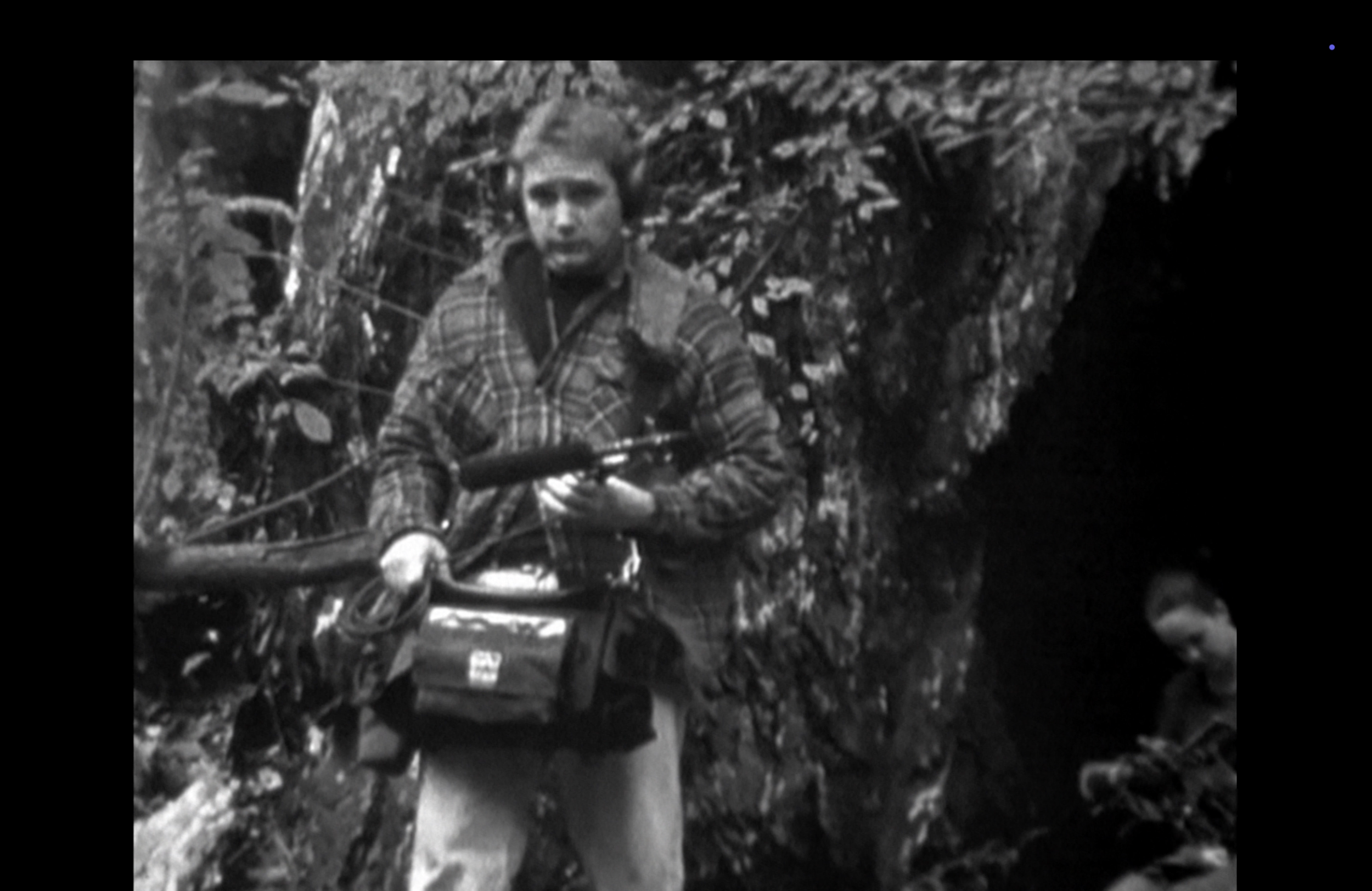
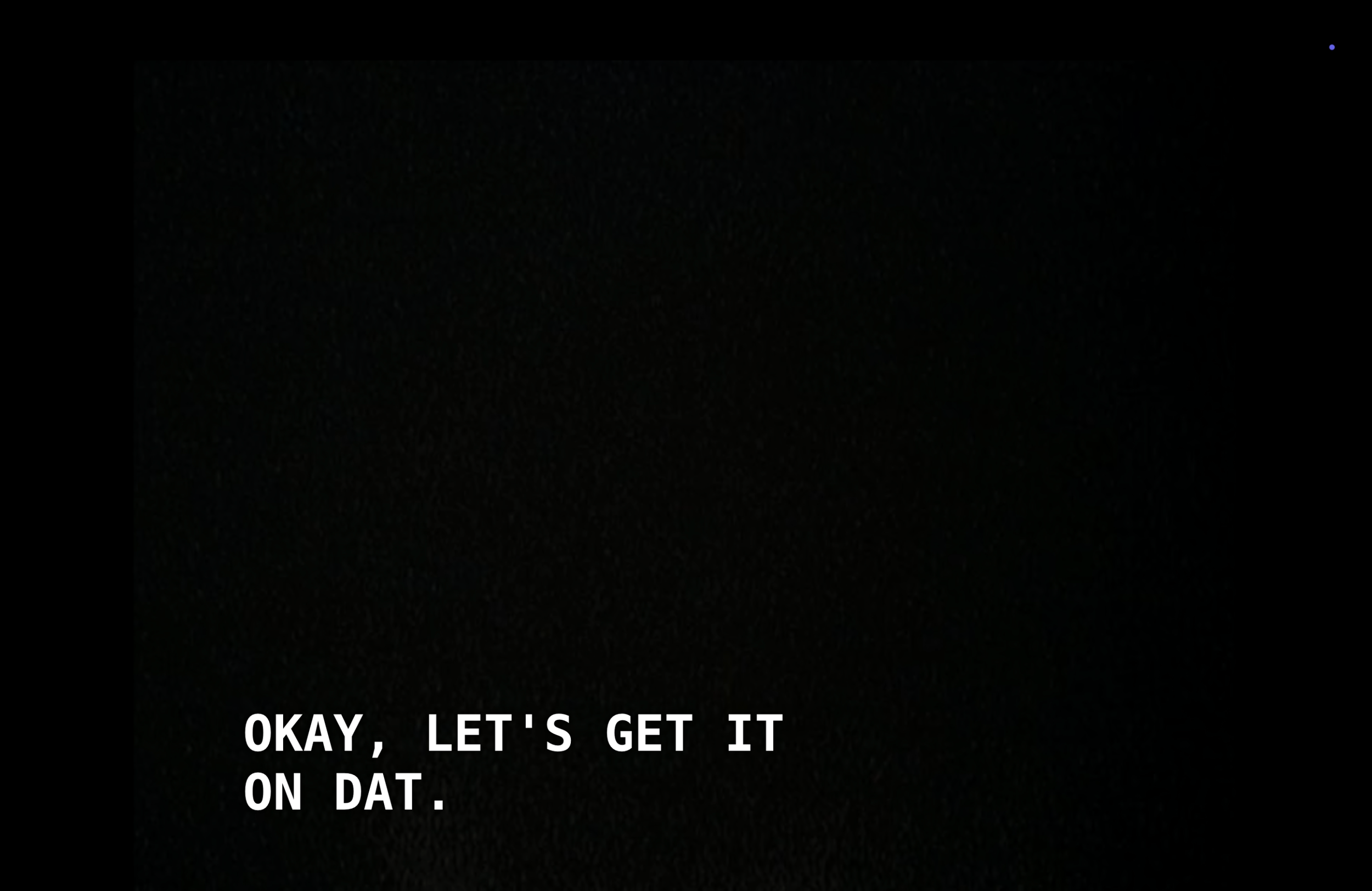
Exactly twenty-seven years ago tonight, on Halloween in 1999, I was sitting in the gloom of the Peckham Premier watching The Blair Witch Project. At the time, the cinema was full of nervous teenagers laughing and rustling sweet wrappers to break the tension. But what stayed with me over the years was what the film did with sound. In the pitch-black of the woods, when the camera is capped or shoved into a sleeping bag, the visual drops away completely. The only witness left in the tent is a battery-powered DAT recorder and a shotgun microphone. In the dark, any pastoral charm fades into something indifferent, and every snapping twig becomes a question.
* * *
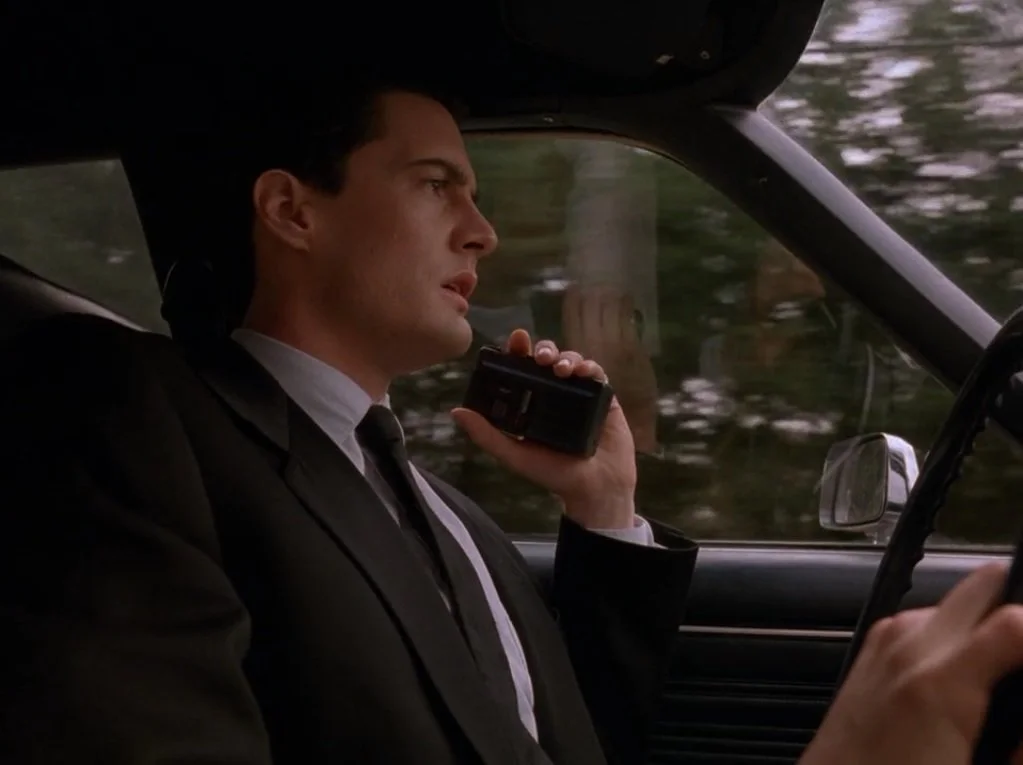
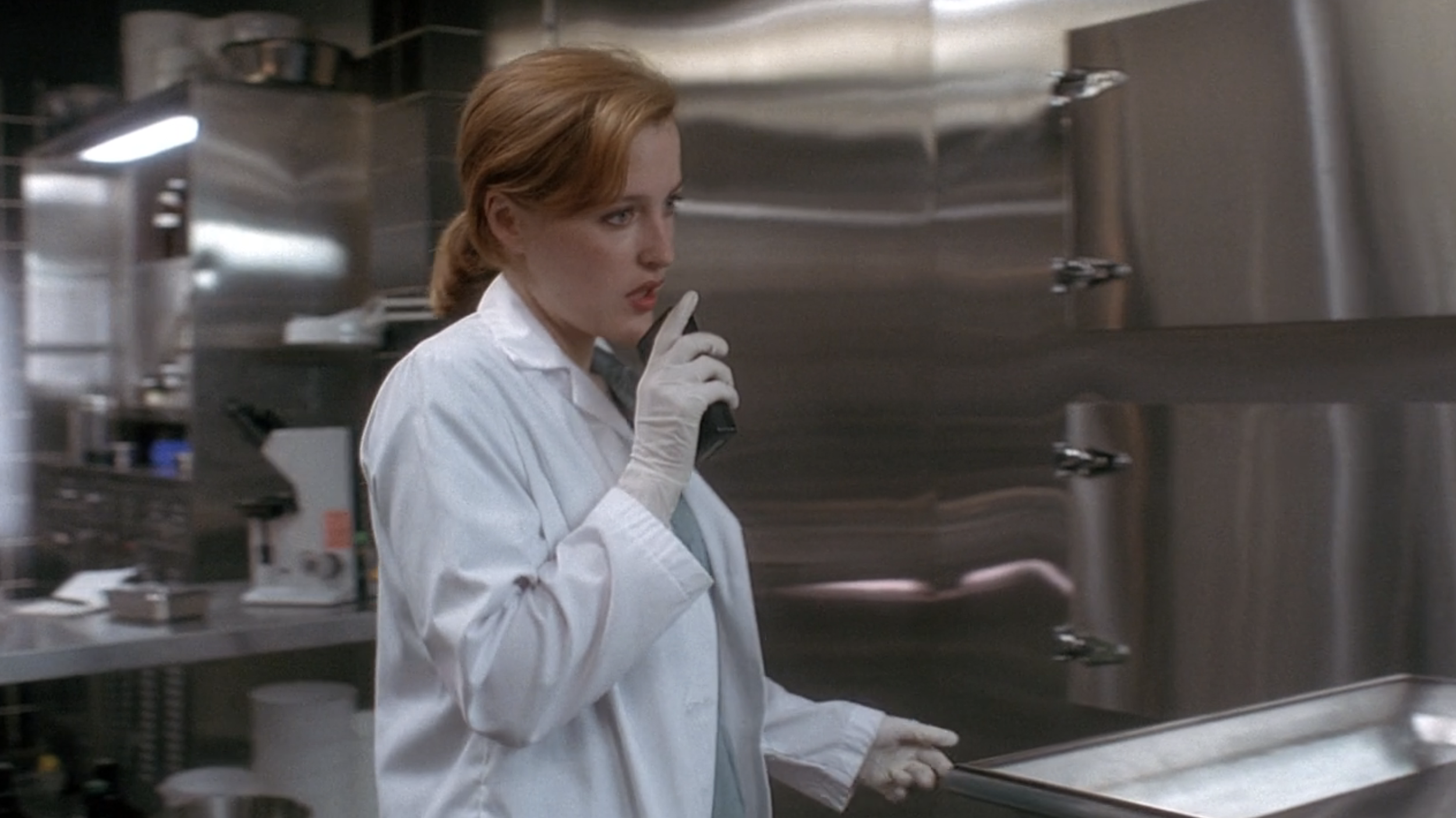
Through the nineties, the handheld recorder kept surfacing on screen. Whenever a story pushed someone towards the edges of reason, a portable machine found its way into their hands. In Twin Peaks, Dale Cooper narrates his days into a microcassette, addressing both forensic details and private musings to the unseen Diane. He logs cloud cover, temperature, and the Douglas firs before the woods begin to turn strange. In The X-Files, Dana Scully speaks the clinical vocabulary of pathology directly into a dictaphone at the mortuary, using the machine as an empirical anchor, a way to rationalise the irrational before federal paperwork can iron it out. (In reality, the FBI spent decades resisting the recording of interviews, clinging to typed agent summaries well into the 2010s).
And then there is Helen Lyle in Bernard Rose’s Candyman.
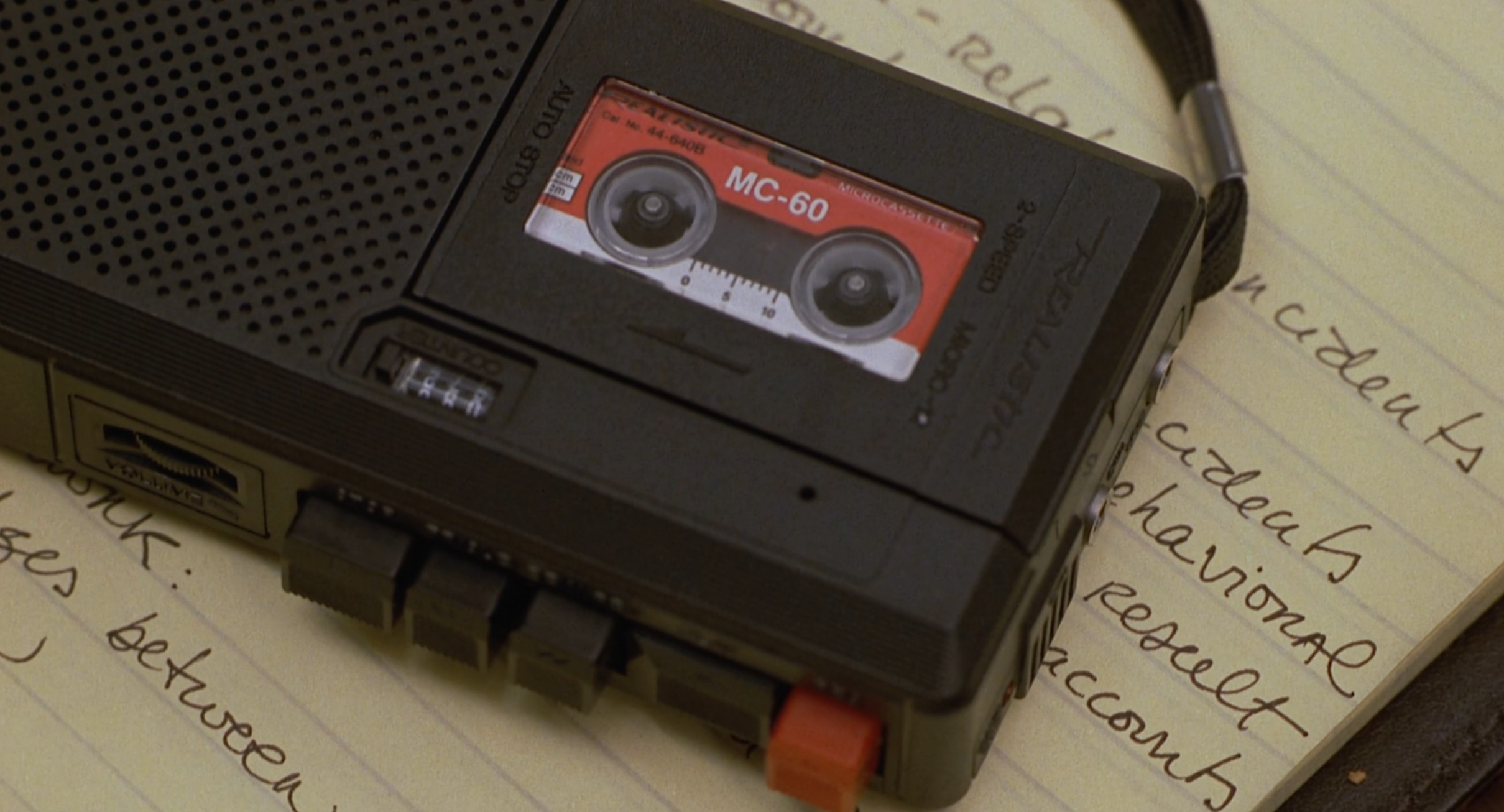
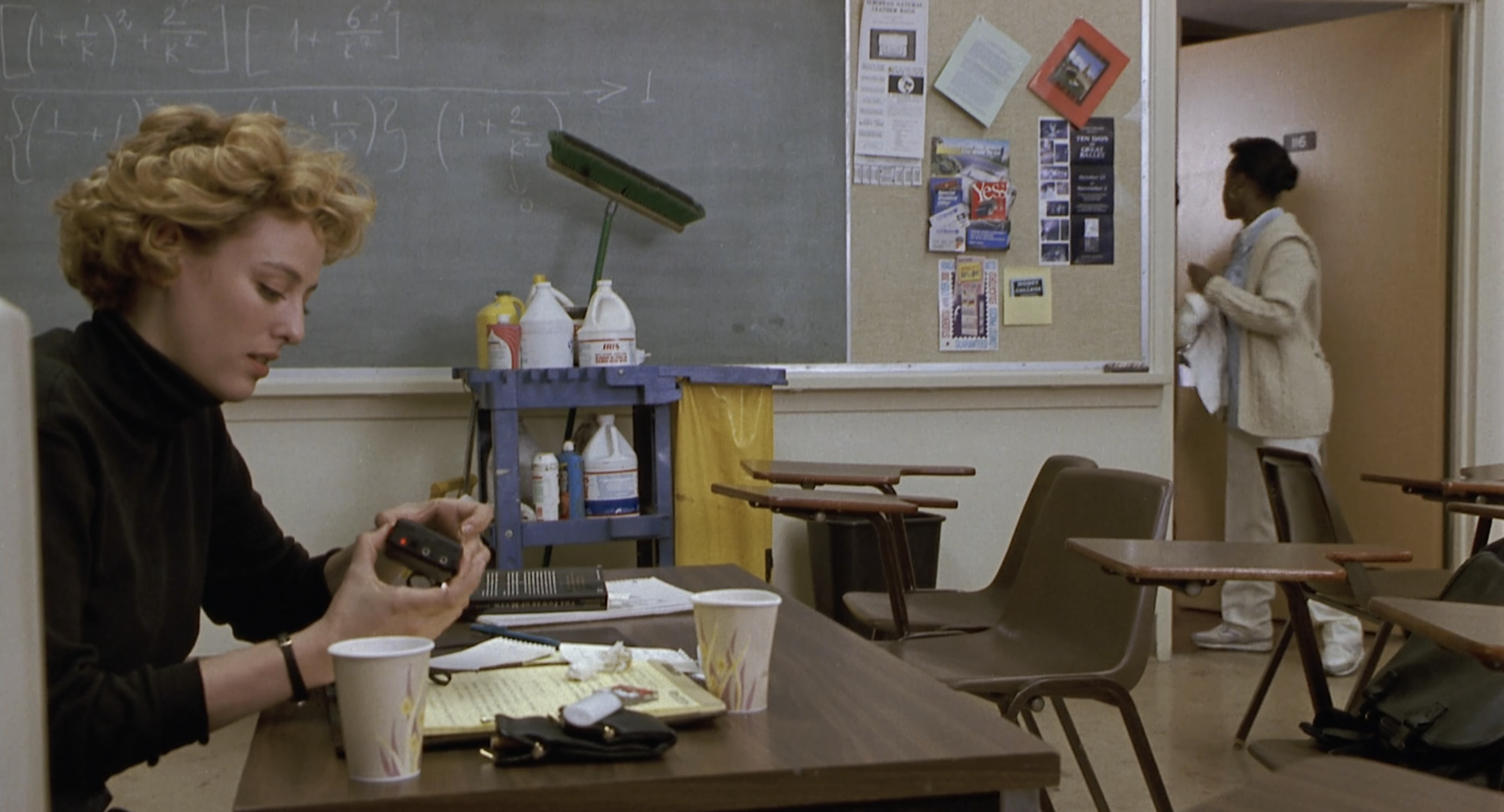
Anyone who has spent years buried in research recognises Helen. You recognise that sudden jolt of discovery where you let yourself be consumed by the rabbit hole. In Helen’s case, it compels her to slip away on her own because she knows her colleague will tell her to turn back. Sitting in an empty university classroom with her Realistic microcassette recorder, Helen initially uses the machine as an academic shield. It allows her to transcribe student interviews about campus lore and mirror-dares from a comfortable distance, treating urban legends as harmless, migratory stories to be catalogued for a doctoral thesis.
The turning point comes without warning: a conversation with the university’s evening cleaning staff delivers an important correction. Candyman isn't campus gossip; a woman named Ruthie Jean was murdered in Cabrini-Green, and it was reported in the papers.
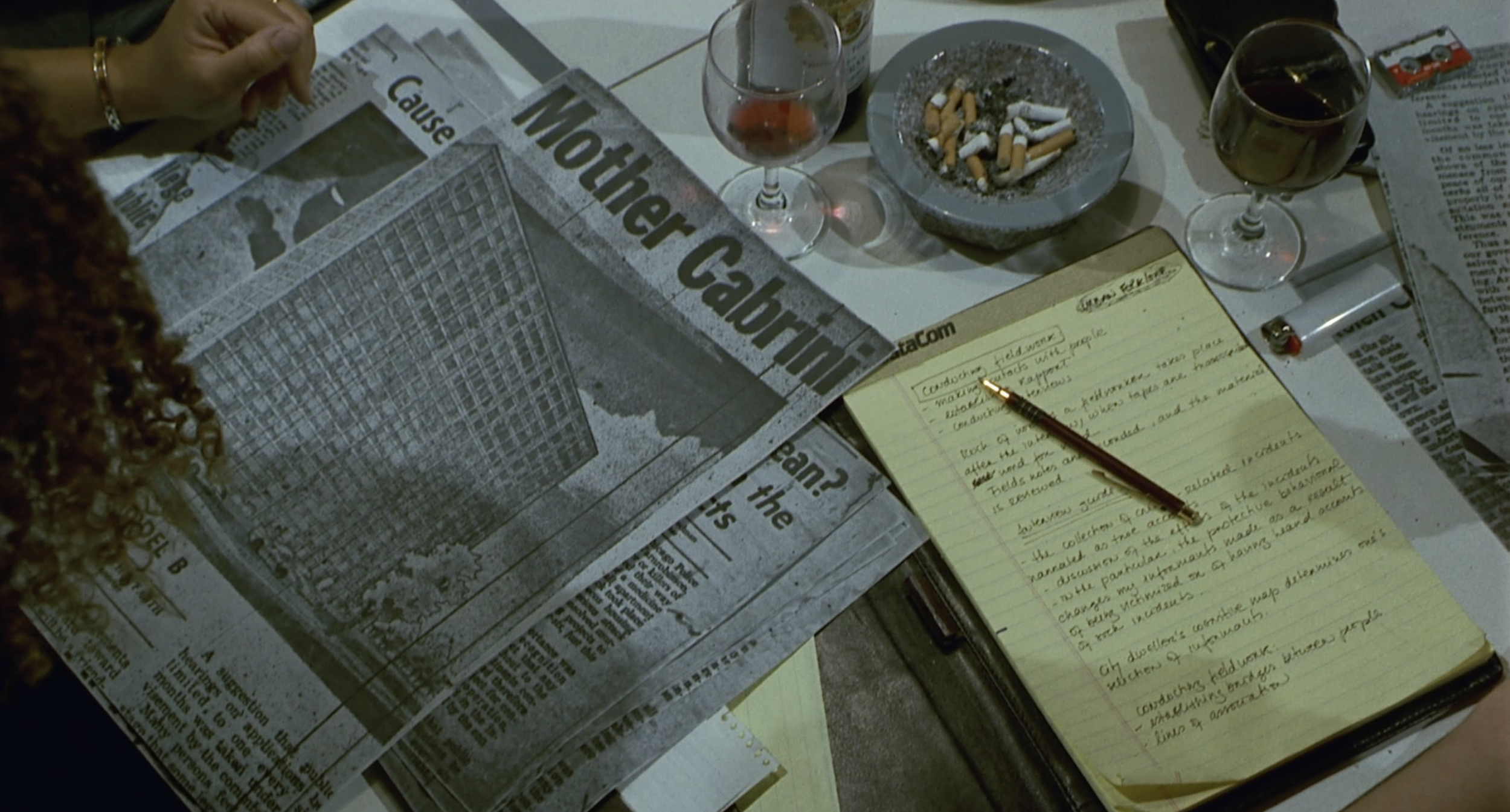
Pulling the microfiche in the university library, Helen uncovers an architectural doubling that hits a bit too close to home. In the geography of the film, her own apartment in Lincoln Village was poured from the same public-housing mould. The adjoining bathrooms share a void sandwiched between back-to-back medicine cabinets, a building shortcut that left residents separated by nothing more than thin metal casing.
Here the film touches a devastating reality. Ruthie Jean was modelled directly on Ruthie Mae McCoy, who was murdered in Chicago’s ABLA Homes in 1987 after calling 911 four times while intruders worked the cabinet loose from the vacant unit next door. Because the building's design was so inherently bizarre, her factual description of men breaking in through the mirror was dismissed by dispatchers as a delusion. When housing security and the police finally arrived, the master key failed; McCoy had reinforced her front door against the dangers of the hallway, unaware that the building left her exposed by a hole that had always been there.
When Helen enters Cabrini-Green, she leaves the tape recorder behind and brings only a 35mm camera. The recorded interviews have taken her as far as they can. Now, the legend has physical coordinates: breachable walls, peeling institutional paint, and a derelict apartment that doubles as both a gang hideout and an apotropaic altar of candy. But her academic detachment cannot protect her. Even after learning of the murder, Helen performs the mirror dare in her own bathroom, treating the residents' genuine fear as a superstition to be dismantled for a doctoral thesis. Cabrini-Green was never an abstract folklore site; it was a living community shaped by municipal neglect and grief. By reducing a real human tragedy to an academic puzzle, she ends up trapped inside the myth she came to record.
* * *
Five years later, on the other side of the Atlantic, another young woman sat at a cluttered desk with a cassette player, pushing back against administrative shortcuts.
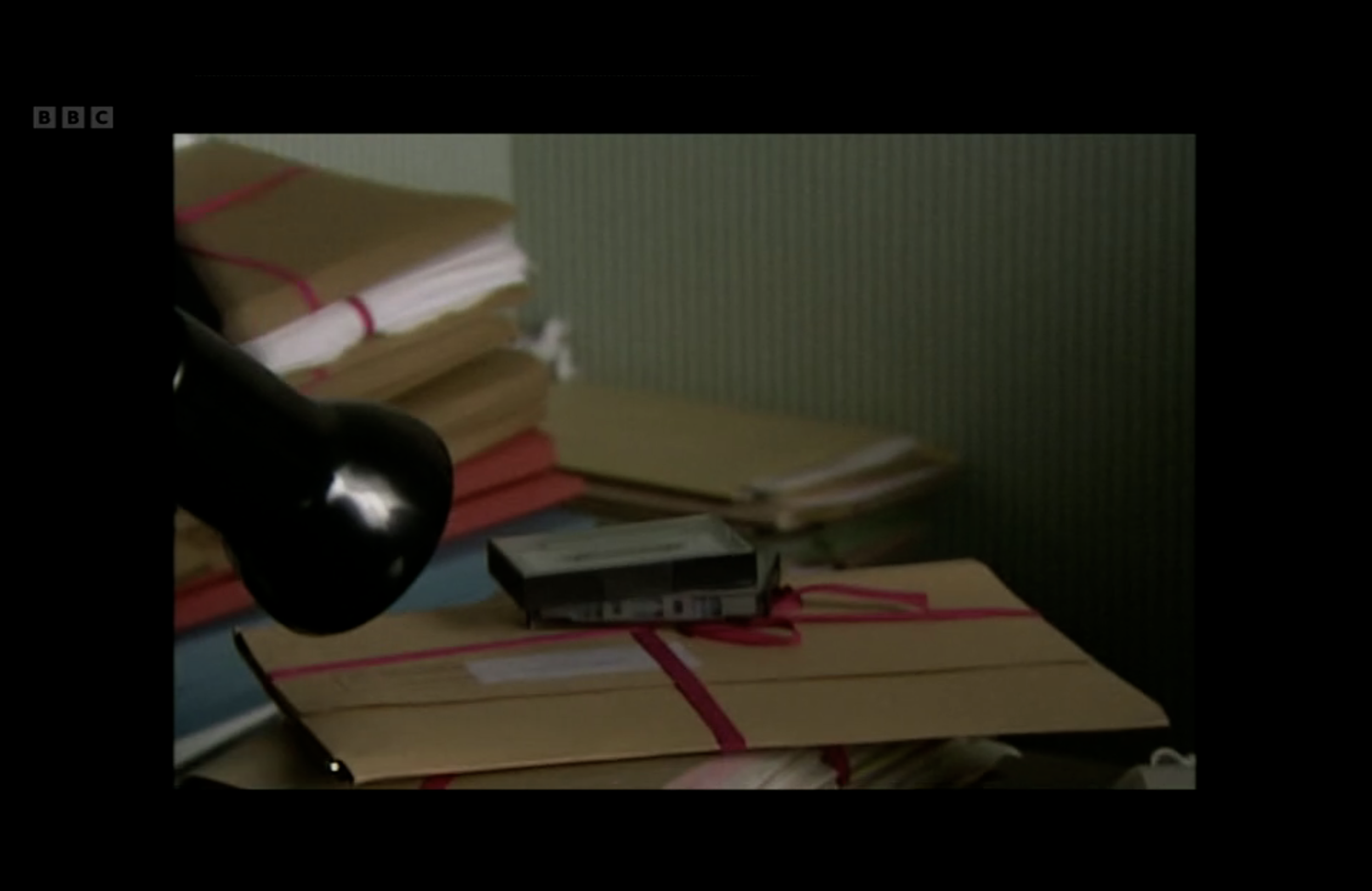
In the BBC drama This Life, Anna Forbes and Miles Stuart, the rival pupils at Gray’s Inn, are constantly drowning under the weight of the criminal courts. When Miles drops a prosecution bundle in front of her, he points out that the police interviews have already been transcribed. His flippancy isn't malice; he is an exhausted junior barrister with a packed court diary, making the condensed file tied in pink tape something of an unexpected gift, a brief that can be thumbed through on the District line, highlighted in ten minutes, and accepted as good enough.
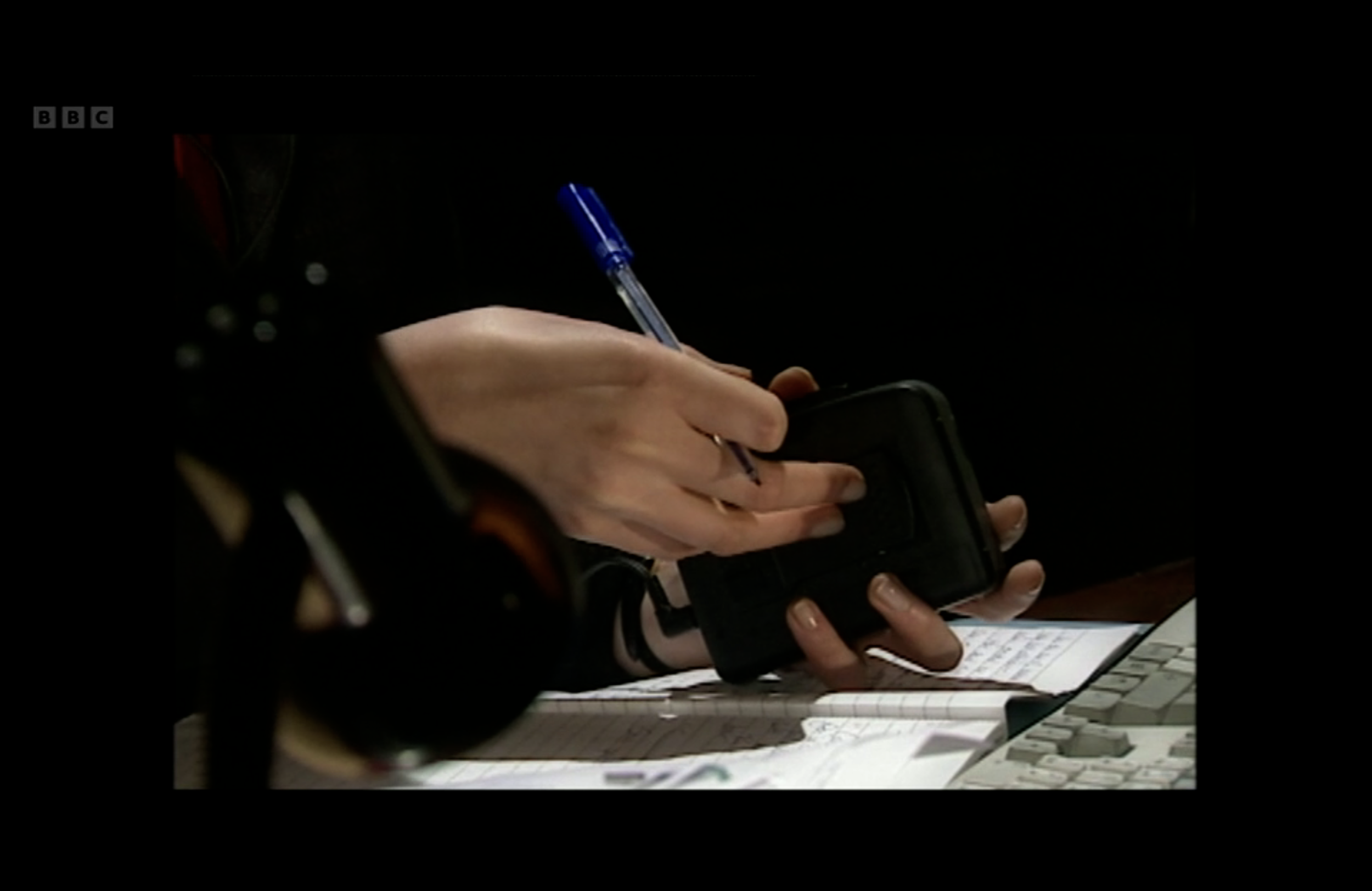
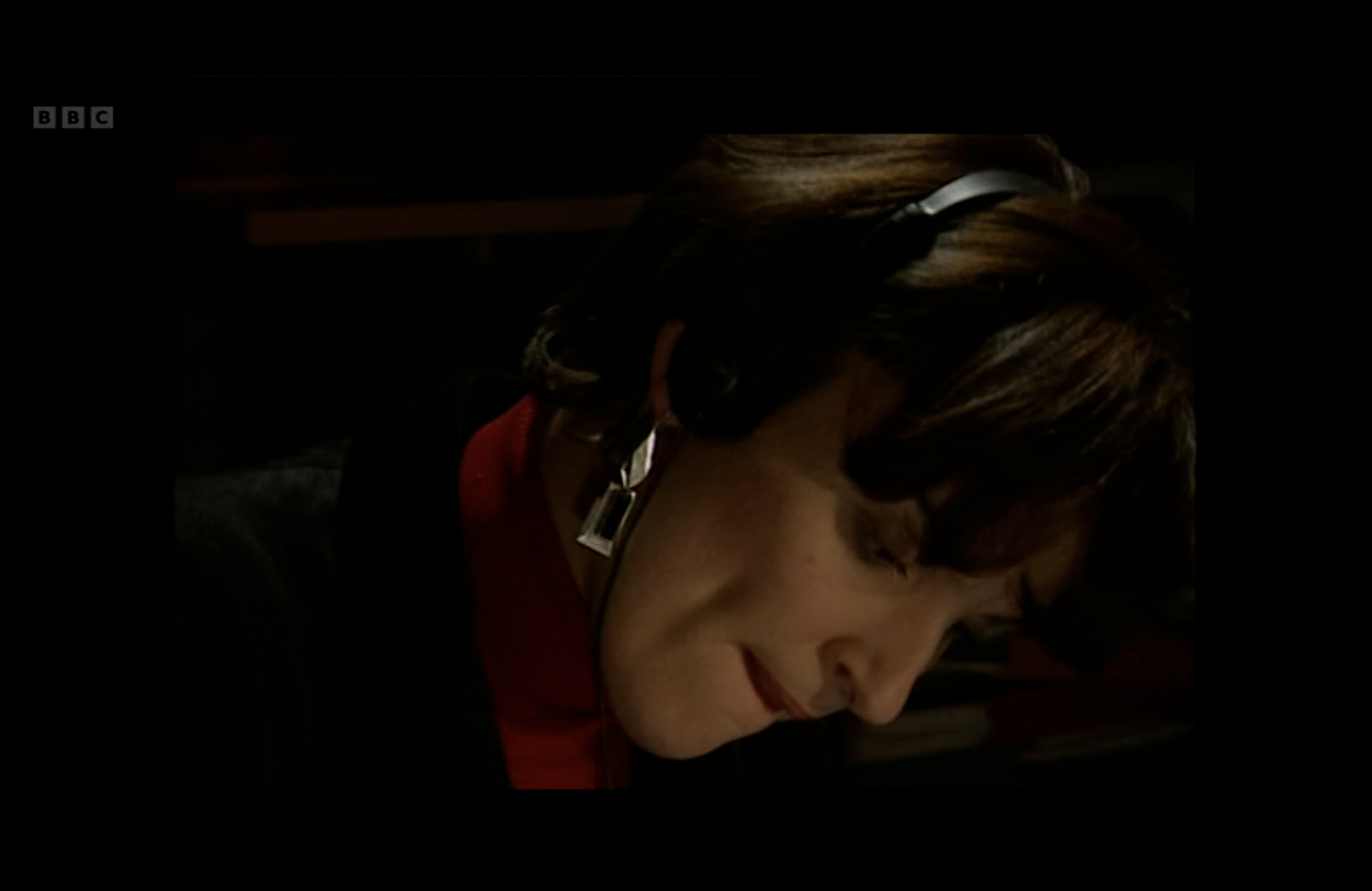
What Anna does next would be considered the long road; what she is about to perform is an act of legal philology. Pulling a Walkman from her drawer and sliding on a pair of on-ear headphones, she sets the paperwork aside.
A police interview room is a closed, sterile world; unless you were inside it, the typed Record of Taped Interview (ROTI) is all anyone ever sees. Under PACE rules, typists were actively instructed to summarise the interview to keep court files manageable, typing only selected passages verbatim. But transcription is always an interpretative act, and the page flattens reality. Of course, tape has its own infidelities, but it preserves the mess of speech. Take a simple phrase: 'I completely lost it.' Spoken through an exasperated laugh, it's harmless venting. Uttered as a flat whisper into the microphone, it sounds like criminal intent. On paper, both read identically.
By sitting through the tape in real time, Anna is acting out the humanist rallying cry: ad fontes—to the sources. Just as Erasmus and his contemporaries rejected centuries of second-hand Latin summaries to inspect the original Greek manuscripts directly, Anna bypasses the Crown's paper digest. This is Erasmus at the law desk. In doing so, she catches the vital spoken words the typist dropped, collapsing the prosecution's case before Miles even makes it to court.
* * *
Putting Helen and Anna side by side reveals two opposing instincts at the close of the analogue era. For Helen, the portable recorder establishes an ethnographic cordon sanitaire. It acts as a protective barrier, turning living dread into a clinical specimen, until observer becomes participant. For Anna, the cassette operates as an acoustic proxy. In an English legal system where the police summary routinely takes precedence, the tape is the only way defence counsel can step behind the curtain of that locked interview room. Where Helen seeks detachment, Anna uses it to test the Crown’s paper consensus against the unvarnished reality of what was actually said.
That shift was driven by miniaturisation. For decades, magnetic recording had been an institutional, heavy-duty affair, confined to broadcast studios or lugged through the field by technicians. By the nineties, consumer electronics had compressed the machinery into battery-powered plastic bricks that slipped neatly into satchels, briefcases, and desk drawers. The technology finally reached that vade mecum: the tools of the investigator now lived in civilian coat pockets.
It was a unique interregnum in the history of recording. Capture had escaped the monopoly of the institution, but it had not yet dissolved into the silent, ambient software of the smartphone. Today, carrying a recording device is unremarkable; it runs quietly in the background of every phone. But between the clunk of the record button, the whir of the spools, and the glowing red diode, analogue tape has always made itself known.
That is the risk of ad fontes: it brings you face to face with what actually happened. For Anna, it is a small triumph; the truth was right there on the spool. For Helen, it becomes Nietzsche’s abyss; her hubris was believing she was immune to what she uncovered.
Whether you're sliding on a pair of foam headphones or speaking into the glass: when you go to the source, the source looks back at you.
———
The hour is getting late, and there’s a bit of a crowd tonight, what with the veil being at its thinnest; the meters are spiking, and the local power is already beginning to dip. I need to transmit this dispatch before the frequency gets completely swamped.
If you have a tape deck close to hand, give it an unhurried hour tonight. Just mind what you say into the mirror.
—N.G.
————————————————————————
~𐫱~
Plates
Archive
⁍ № 0001 // 2026 - - - - - - - - - - - - -
- - - - - - - - - - - - - - - - - - - - - - - -
- - - - - - - - - - - - - - - - - - - - - - - -
- - - - - - - - - - - - - - - - - - - - - - - -
Full Directory
☞ MarginaliaRadioShack in Room 315
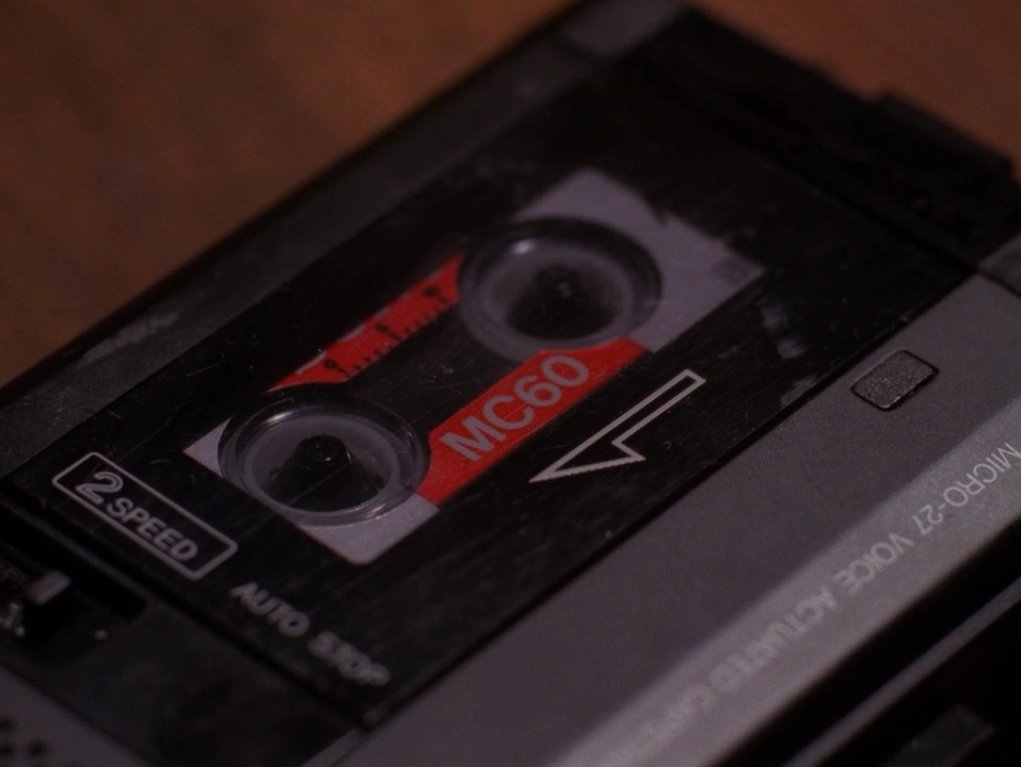
While Dale Cooper’s signature machine is a 1988 Panasonic RN-105, the deck had a crucial narrative defect: it lacked voice-activated recording. When the script required it—first to record the screeching of Waldo the myna bird, and later to catch Cooper’s monologue on the floor of Room 315—the Panasonic was swapped for a Realistic Micro-26, and later a Micro-27. Although the prop department blacked out all logos with tape, it’s from the same consumer line Helen Lyle uses to catalogue urban horror in Chicago.
☞ MarginaliaHow to Stay Alive in the Woods
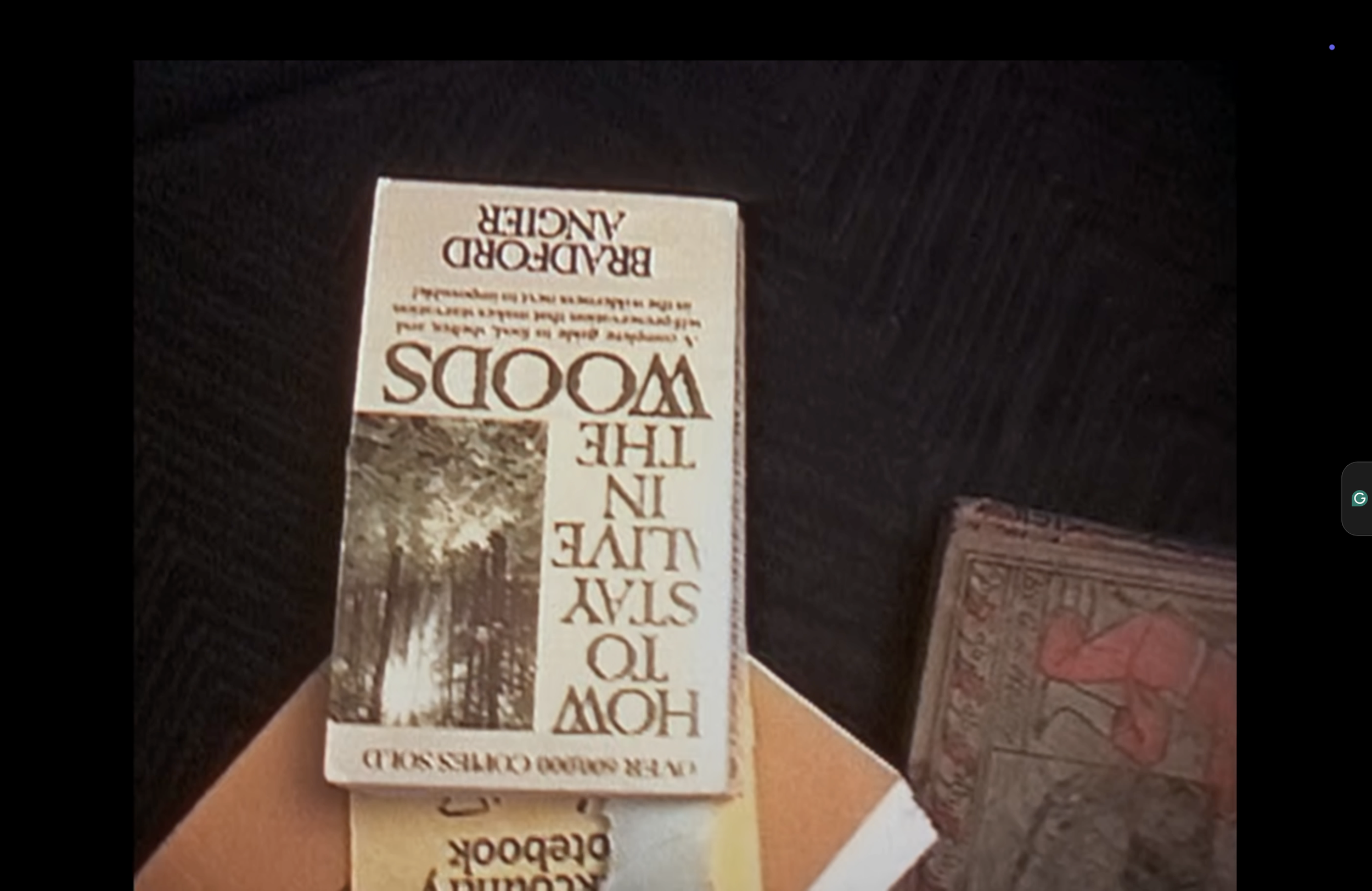
Right at the start of The Blair Witch Project, Heather Donahue packs a small stack of paperbacks, holding up Bradford Angier’s 1956 survival classic How to Stay Alive in the Woods as “essential reading… cause you never know what’s going to happen.” The book is packed with eccentric mid-century lore: how to boil broth in an earth-hole using heated river stones, how to fashion emergency sunglasses from birch bark, and an assurance that a porcupine’s liver is “surprisingly large and uncommonly toothsome” (best served with fava beans and an unpretentious Chianti, one assumes). It is, however, remarkably quiet on what to do when your camera batteries freeze, and small piles of stones begin appearing outside your tent at two in the morning.
☞ MarginaliaThe Cabrini Requiem
Philip Glass initially recoiled from the finished film. Having agreed to score Candyman after Bernard Rose presented it as an elevated adaptation of Clive Barker’s ‘The Forbidden’ he felt his composition had been squandered on a slasher.
Yet there is an undeniable alchemy at play. Rejecting the synth drones and shock-stabs typical of early 1990s horror, Glass scored the film around a gothic music-box motif, a massive church pipe organ, and 48-voice choral counterpoint. The result provides a mournful requiem for the estate, transmuting an urban legend into classical tragedy.
☞ MarginaliaThe Unexhumed Stage
Between court cases, Anna Forbes returned south of the river to a communal house-share in a Georgian property at Anchor Terrace on Southwark Bridge Road. Directly beneath their communal residence lies English dramatic history.
In October 1989, the Museum of London excavated the small car park behind the terrace under site code ACT89, uncovering chalk foundations, charred timber footings, and compacted layers of hazelnut shells (the popcorn of the day)—the perimeter of the 1599 Globe Theatre.
Because Anchor Terrace is a Grade II listed building, statutory protections prevented archaeologists from excavating beneath the structure. The dig was halted after uncovering barely five per cent of the playhouse circumference. The remainder—the yard, the gallery bays, and the footprint of the timber stage where Hamlet and Macbeth were first spoken—was backfilled beneath sand and a geotextile membrane, remaining sealed beneath the car park and the basement kitchen.
☞ Marginalia95a Rye Lane
A psychogeographical note
Long before I had any dignified theory to justify it, 95A Rye Lane was already an exercise in pure projection. Having worn down a VHS of Candyman throughout the mid-nineties, the cinema foyer supplied an immediate Pavlovian bell: a pick-and-mix counter branded Candy Shack, priming the association hours before the walk back to the car.
The building was architecturally ripe for it. Candyman’s parking-deck materialisation relies on Walter Netsch’s brutalist campus for the University of Illinois Chicago (Skidmore, Owings & Merrill)—raw, poured-in-place pillars turning an ordinary civic transition predatory.
The multi-storey above the Peckham Premier shared that structural grammar, minus any campus decorum. Leaving the screen meant stepping into unglazed concrete bays, railway wind, and men materialising from behind pillars with wild, rehearsed emergencies designed to extract cash through a cracked window pane.
Today, the upper decks host orchestral recitals and rooftop bars, while the actual parking is tucked away on the ground floor out back. The concrete carcass hasn't changed; it was just the first place that taught me how effortlessly an indifferent municipal slab can be haunted by whatever you brought into it.
⋄ Ephemera ⋄
Chicago Reader (Vol. 16, No. 49; 4 Sept 1987)
Cover illustration by Tom Herzberg for Steve Bogira, "They Came in Through the Bathroom Mirror" Archive ↗
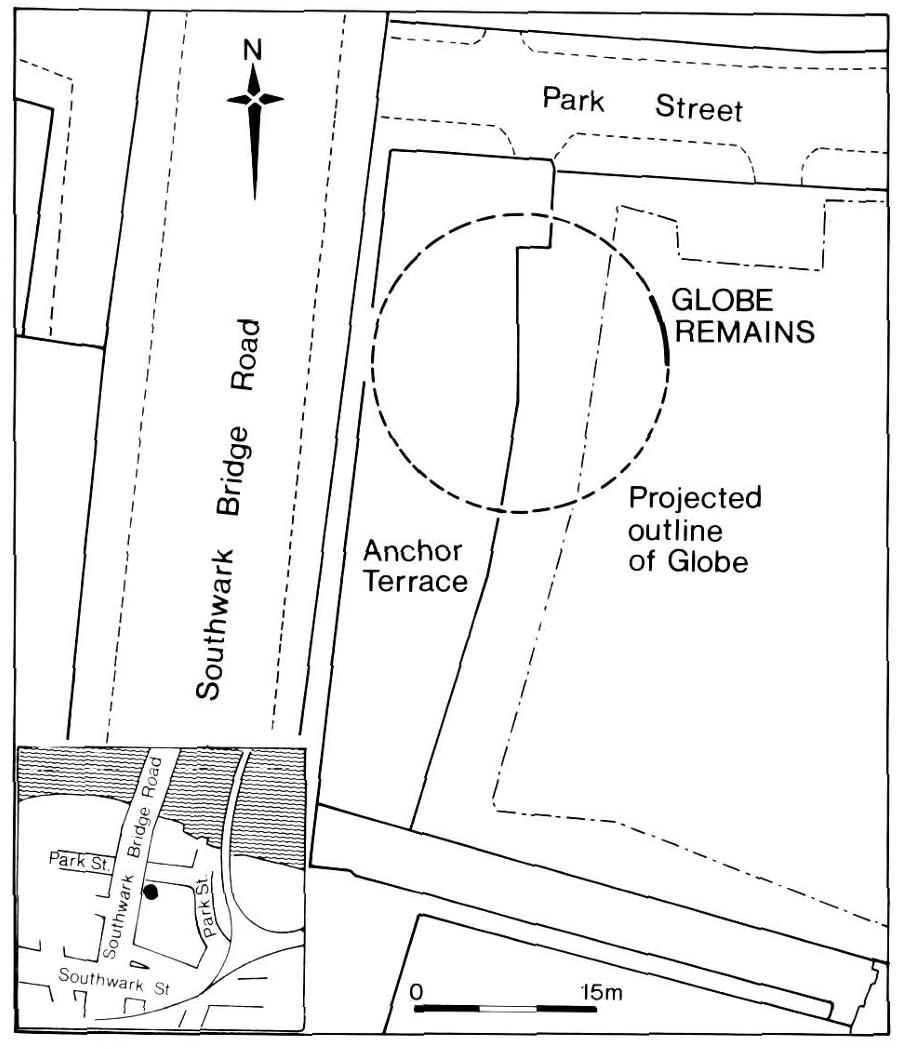
The Globe Playhouse (ACT89 Survey)
Plan drawn by Susan Hurman; Simon McCudden, "The Discovery of the Globe Theatre," London Archaeologist 6, no. 6 (1990) ADS Archive ↗
Peckham Premier (Exterior, Foyer & Auditorium)
Photos: David Simpson / Cinema Treasures ↗
-
![]()
Bradford Angier, How to Stay Alive in the Woods (1956); set detail, The Blair Witch Project (dir. Daniel Myrick and Eduardo Sánchez, 1999).
-
![]()
Michael C. Williams with portable digital audio tape (DAT) field rig, The Blair Witch Project (dir. Daniel Myrick and Eduardo Sánchez, 1999).
-
![]()
Unlit night recording ("Okay, let's get it on DAT"), The Blair Witch Project (1999).
-
![]()
Special Agent Dale Cooper dictating to Diane en route, Twin Peaks, Pilot (dir. David Lynch, ABC, 1990).
-
![]()
Realistic Micro-26 voice-actuated microcassette recorder, Twin Peaks, Season 2, Episode 1 (dir. David Lynch, ABC, 1990).
-
![]()
Special Agent Dana Scully dictating field report, The X-Files, Season 3, Episode 6: "2Shy" (dir. David Nutter, Fox, 1995).
-
![]()
Realistic Micro-12 two-speed microcassette recorder on research notes, Candyman (dir. Bernard Rose, 1992).
-
![]()
Helen Lyle (Virginia Madsen) conducting an impromptu interview with university staff, Candyman (dir. Bernard Rose, 1992)
-
![]()
Microfilm newspaper printouts, research notes, and MC-60 microcassette; worktable detail, Candyman (dir. Bernard Rose, 1992).
-
![]()
Crown prosecution bundle bound with pink legal tape, This Life (BBC Two, 1996–1997).
-
![]()
Anna Forbes (Daniela Nardini) pausing playback for notation, This Life (1996–1997).
-
![]()
Anna Forbes reviewing audio evidence via headphones, This Life (BBC Two, 1996–1997).
Postscript
‡ Archival Material & Citations
All archival and third-party materials reproduced are presented for critical review, comparative analysis, and media archaeology under UK Fair Dealing (Copyright, Designs and Patents Act 1988, s. 30) and US Fair Use (17 U.S.C. § 107).
All rights remain with the original creators and copyright holders.
✒ The Register
Partial Obscurations is an occasional distribution of notes that have accumulated on the desk and require an exit.
You are here either by deliberate subscription or clerical accident; either way, you are part of the register now.
To confirm your place upon the register, subscribe here.
⚓︎ Sinking Fund
Dispatches are researched and published independently, entirely outside of sensible working hours.
Contributions placed into the research holding reinforce the autonomy and continuity of the archive.
Log your contribution towards expanding the project.